1
29 , May

Hydraulic Air Oil Coolers: The Key to Efficient Hydraulic System Cooling

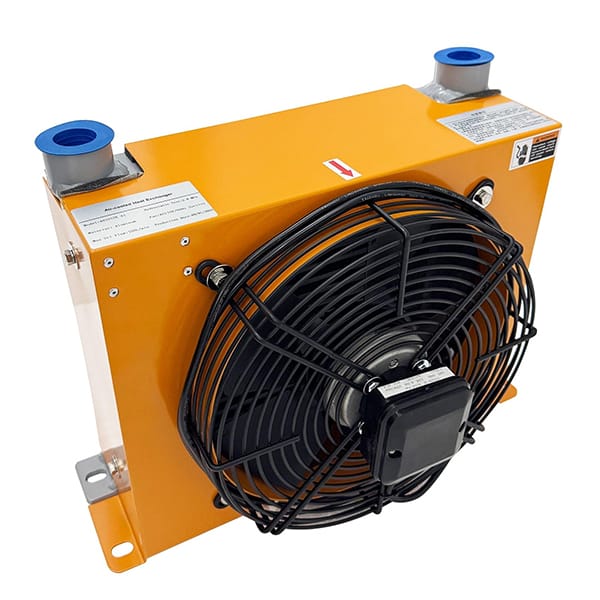
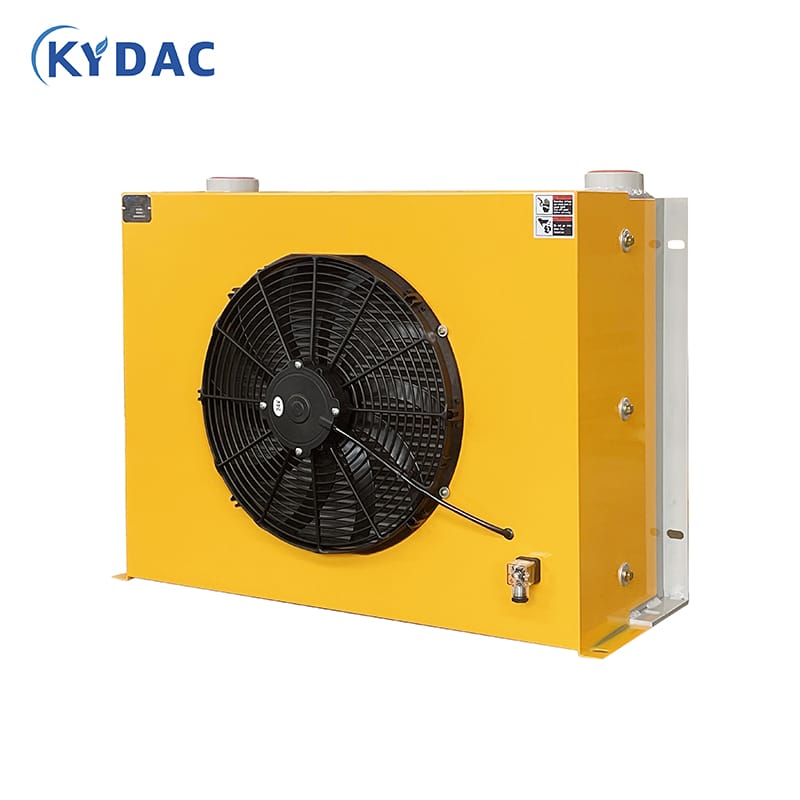
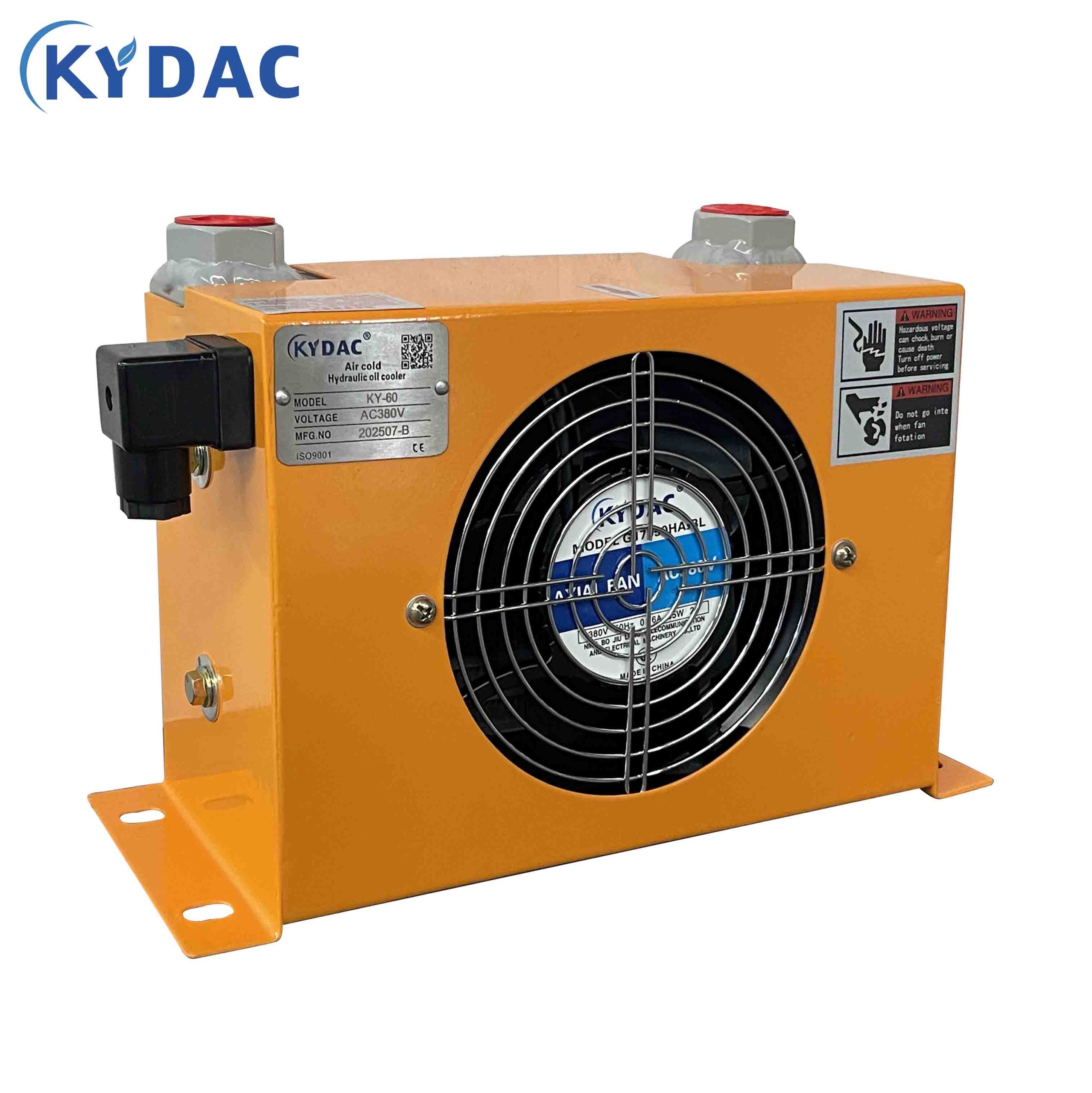
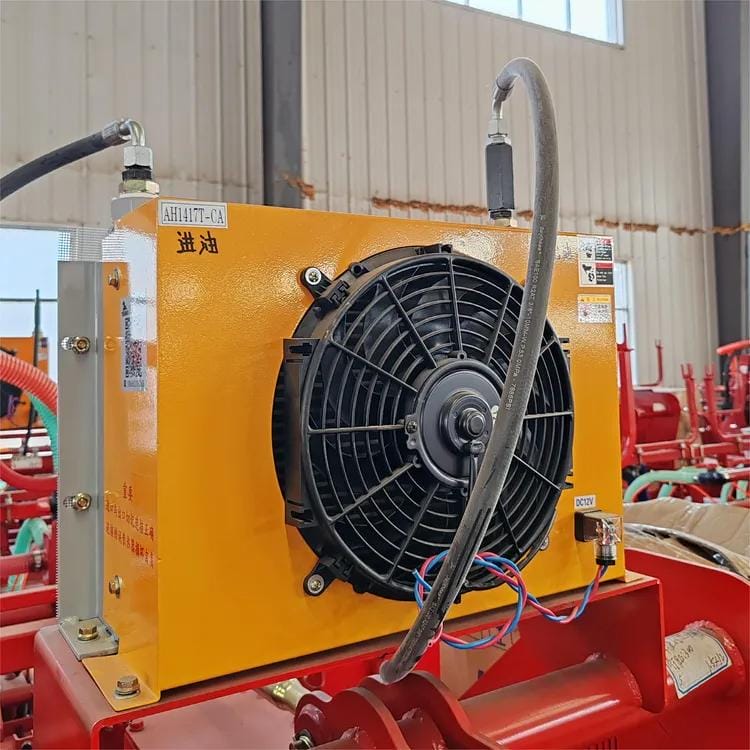
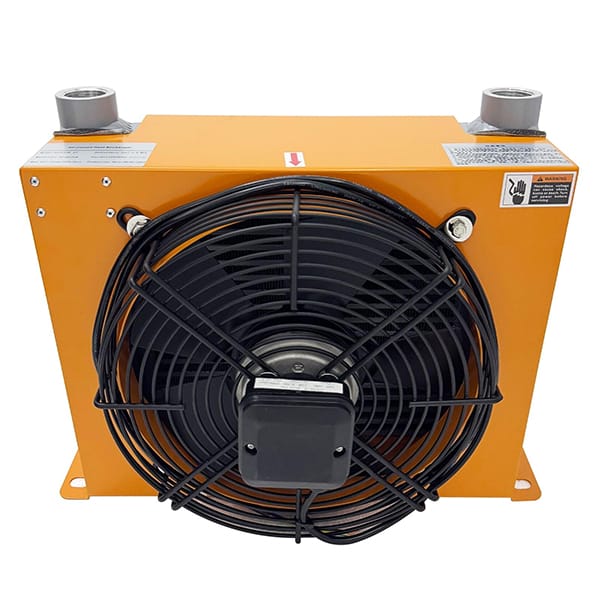
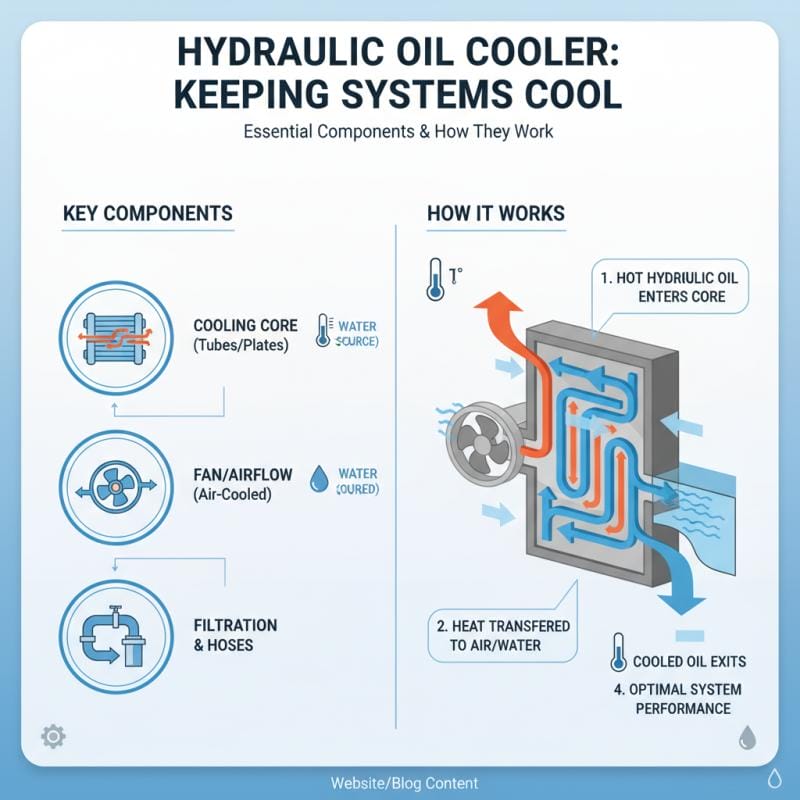
Modern hydraulic systems operate under increasingly demanding conditions. High pressure, continuous operation, and heavy workloads generate significant heat inside hydraulic circuits. Without proper cooling, excessive oil temperature can reduce system efficiency, accelerate component wear, and even lead to costly equipment failure. This is why hydraulic air oil coolers have become an essential component in industrial and mobile hydraulic systems. What Is a Hydraulic Air Oil Cooler? A hydraulic air oil cooler is a cooling device designed to remove heat from hydraulic oil through forced air circulation. The system typically uses: High-efficiency aluminum cooling cores Axial or centrifugal fans Electric or hydraulic motors Optimized airflow structures The cooler transfers heat from the hydraulic oil to the surrounding air, maintaining stable oil temperatures during system operation. Hydraulic air coolers are widely used in: Construction machinery Agricultural equipment Mining machinery Industrial hydraulic stations Marine hydraulic systems Mobile hydraulic vehicles Why Hydraulic Systems Overheat Hydraulic systems naturally generate heat during operation due to: Pressure losses Fluid friction Pump inefficiency Continuous high-load operation Internal leakage If the oil temperature rises beyond the recommended range, it may cause: Problem Result Oil viscosity reduction Poor lubrication Seal aging Oil leakage Oxidized hydraulic oil Reduced oil lifespan Increased component wear Higher maintenance costs System instability Reduced productivity Proper thermal management is therefore critical for long-term hydraulic system reliability. Main Advantages of Hydraulic Air Oil Coolers 1. No External Water Source Required One of the biggest advantages of air oil coolers is operational independence. Compared with water-cooled systems, hydraulic air coolers: Do not require cooling water Simplify system installation Reduce piping complexity Lower maintenance requirements This makes them ideal for: Outdoor equipment Mobile machinery Remote job sites Harsh environments 2. Eliminate Oil-Water Contamination Risk Water-cooled systems may experience internal leakage, which can cause water and hydraulic oil to mix. This contamination may lead to: Hydraulic oil degradation Corrosion Pump failure Valve malfunction Hydraulic air oil coolers completely eliminate this risk because no cooling water is used inside the system. This is especially important for high-value industrial equipment. 3. High Cooling Efficiency Modern hydraulic air coolers are designed with: Large heat transfer surfaces High-performance fan systems Optimized airflow channels Efficient aluminum heat exchanger cores These features ensure stable cooling performance even under heavy-duty operating conditions. 4. Compact Structure and Easy Installation Hydraulic air oil coolers feature compact integrated structures that help: Save installation space Improve equipment layout flexibility Simplify hydraulic system design Reduce overall installation costs This compact design is highly suitable for integrated hydraulic power units and mobile machinery. Applications of Hydraulic Air Oil Coolers Hydraulic air oil coolers are widely used across multiple industries. Construction Machinery Excavators Loaders Cranes Road machinery Agricultural Equipment Harvesters Tractors Sprayers Industrial Equipment Hydraulic power units Injection molding machines CNC machinery Hydraulic presses Mining and Heavy Industry Mining vehicles Metallurgical equipment Port machinery Offshore hydraulic systems These industries require reliable cooling solutions capable of operating continuously under severe conditions. How to Select the Right Hydraulic Air Oil Cooler Selecting the proper cooler depends on several important factors: Selection Factor Description Cooling capacity Required heat dissipation Oil flow rate Hydraulic circulation volume Working pressure System pressure rating Ambient temperature Environmental conditions Installation space Available mounting area A properly matched hydraulic cooler helps improve: System efficiency Equipment reliability Oil service life Maintenance intervals Air Cooling vs Water Cooling Feature Air Oil Cooler Water Cooler Water source required No Yes Installation complexity Low Higher Maintenance Simple Moderate Risk of contamination None Possible Mobile equipment suitability Excellent Limited For outdoor and mobile hydraulic systems, air cooling is often the preferred solution due to its simplicity and reliability. Importance of Hydraulic Oil Temperature Control Maintaining stable hydraulic oil temperature helps: Protect hydraulic pumps Reduce component wear Improve lubrication performance Extend oil lifespan Lower downtime risk Increase operational efficiency In modern industrial applications, hydraulic cooling is not only about temperature reduction — it is a critical part of hydraulic system protection and reliability management. Conclusion Hydraulic air oil coolers provide an efficient, reliable, and cost-effective cooling solution for modern hydraulic systems. With advantages such as: Efficient heat dissipation No water dependency Easy installation Low maintenance Excellent environmental adaptability they are widely used in construction machinery, industrial equipment, agricultural machinery, and heavy-duty hydraulic applications. For companies seeking long-term hydraulic system reliability and improved operational performance, hydraulic air oil coolers are an essential thermal management solution.  
1
20 , May

Why Hydraulic Air Oil Coolers Are Essential for Modern Hydraulic Systems

In modern hydraulic systems, excessive heat is one of the leading causes of equipment failure, oil degradation, and reduced operational efficiency. Whether in construction machinery, agricultural equipment, mining vehicles, or industrial hydraulic stations, maintaining proper oil temperature is critical for system reliability. This is why more industries are turning to hydraulic air oil coolers as an efficient and reliable cooling solution. What Is a Hydraulic Air Oil Cooler? A hydraulic air oil cooler is a heat exchange device designed to remove excess heat from hydraulic oil by using ambient air and a fan-driven cooling system. Unlike water-cooled systems, air oil coolers do not require an external water source, making them ideal for: Mobile hydraulic equipment Outdoor working environments Remote industrial sites Heavy-duty machinery The system typically consists of: Aluminum cooling core Axial fan Hydraulic oil circulation channels Motor drive system Protective housing Its primary function is to keep hydraulic oil within the optimal operating temperature range. Why Hydraulic Systems Need Cooling Hydraulic systems generate heat continuously during operation due to: Fluid friction Pressure losses Pump inefficiencies High-load continuous operation If the oil temperature becomes too high, it can lead to: Common Problems Caused by Overheating Problem Impact Oil viscosity reduction Poor lubrication Seal aging Oil leakage Component wear Shorter equipment life Oxidation of hydraulic oil Increased maintenance cost System instability Reduced productivity Studies in hydraulic engineering show that excessive oil temperature significantly shortens hydraulic component lifespan. Key Advantages of Hydraulic Air Oil Coolers 1. No Water Source Required One of the biggest advantages of air-cooled hydraulic systems is operational flexibility. Unlike water coolers, air oil coolers: Do not rely on cooling water Avoid complex piping systems Reduce installation costs Simplify maintenance This makes them highly suitable for mobile equipment and outdoor environments. 2. Prevent Oil-Water Contamination In water cooling systems, cooler failure may cause water and oil to mix, potentially damaging the entire hydraulic system. Air oil coolers eliminate this risk completely because: No cooling water enters the system No internal water leakage risk exists Hydraulic oil cleanliness is easier to maintain This is particularly important in high-value industrial equipment. 3. High Cooling Efficiency Modern hydraulic air coolers feature: Large heat dissipation areas High-efficiency aluminum cores Optimized airflow design High-performance axial fans These features allow the cooler to maintain stable oil temperatures even under demanding operating conditions. 4. Suitable for Harsh Environments Hydraulic air coolers are widely used in: Construction machinery Agricultural machinery Mining equipment Marine hydraulic systems Industrial automation equipment Because they are designed for: High-pressure operation Wide ambient temperature ranges Continuous-duty applications Heavy vibration environments Applications of Hydraulic Air Oil Coolers Hydraulic air oil coolers are commonly used in: Construction Equipment Excavators Loaders Cranes Road machinery Agricultural Machinery Harvesters Tractors Sprayers Industrial Systems Hydraulic power units CNC machinery Press machines Injection molding equipment Renewable Energy Wind turbine hydraulic systems Offshore hydraulic equipment How to Choose the Right Hydraulic Air Oil Cooler Selecting the correct cooler depends on several factors: Important Selection Parameters Parameter Description Heat dissipation capacity Required cooling performance Oil flow rate System circulation volume Working pressure Hydraulic system pressure Ambient temperature Environmental conditions Installation space Equipment layout limitations A properly sized cooler improves: Energy efficiency Equipment lifespan System stability Maintenance intervals Air Cooling vs Water Cooling Feature Air Oil Cooler Water Cooler Water source required No Yes Maintenance Low Medium Installation complexity Simple Complex Risk of oil-water mixing None Possible Mobile equipment suitability Excellent Limited For mobile hydraulic systems and outdoor machinery, air cooling is often the preferred solution. Why High-Quality Hydraulic Cooling Matters A high-performance hydraulic cooling system helps companies: Reduce downtime Improve equipment reliability Lower maintenance costs Extend hydraulic oil life Protect pumps and valves Increase operational efficiency In modern industrial applications, cooling is no longer optional — it is a critical part of hydraulic system protection. Conclusion Hydraulic air oil coolers play a vital role in maintaining system performance, reliability, and longevity across industrial and mobile hydraulic applications. With advantages such as: Efficient heat dissipation Simple installation Low maintenance No water contamination risk Excellent adaptability to harsh environments air-cooled hydraulic systems continue to be a preferred solution for modern hydraulic equipment. For industries seeking reliable thermal management and long-term hydraulic system protection, hydraulic air oil coolers provide an efficient and cost-effective solution.
blog 3
5 , February

Suction Filters: The Indispensable “Life Guardian” of Modern Hydraulic Systems

In the modern industrial body, built of steel, power, and precision control, hydraulic systems function like the “blood circulation system,” transmitting force and commands. Hydraulic oil is the lifeblood of this system. Yet, this blood is constantly threatened by contamination from “toxins” like dust, wear metals, and moisture. This is where the suction filter, silently installed at the pump’s suction inlet, plays the critical dual role of the system’s “kidney” and “first line of immune defense.” Its mission extends far beyond simple filtration; it is to ensure the health, longevity, and efficient operation of the entire hydraulic organism through source containment, proactive warning, and system protection.   I. Core Duties: Source Protection Beyond Filtration The value of a suction filter is built upon a fundamental vulnerability of hydraulic systems: the hydraulic pump—the “heart” of the system—is extremely sensitive to contaminants. Micron-sized hard particles are enough to score its precision surfaces, accelerate wear, and cause internal leakage, efficiency loss, or even catastrophic failure. Thus, the core duties of a suction filter are layered as follows: Absolute Interception: Physically trapping contaminants via the filter element (often wire mesh or synthetic fiber) before they enter the hydraulic pump. The chosen filtration rating (e.g., 100µm, 40µm, 10µm) directly defines the starting point of cleanliness for all downstream components. Stable Oil Supply: It must be designed for low flow resistance to ensure the pump does not suffer from oil starvation or cavitation during cold starts or with high-viscosity fluid, which can damage the pump. Safety Assurance: Equipped with intelligent accessories (like clogging indicators and bypass valves), it alerts when the element is loaded and provides an emergency flow path in extreme conditions. Its highest principle is “protecting system continuity takes priority over temporary filtration accuracy.”   II. Technological Evolution: From Passive Component to Intelligent Node The modern suction filter has evolved beyond a simple filter housing, integrating multiple active protection and user-friendly features: Clogging Indicator: Activates (via electrical contact or visual gauge) when the pressure differential across the element reaches a set value (e.g., 0.018 MPa), signaling the need for service. This enables a shift from “time-based replacement” to “condition-based maintenance,” facilitating predictive upkeep. Bypass Valve Protection: If the pressure differential rises further to a critical threshold (e.g., 0.02 MPa), the bypass valve opens automatically, allowing unfiltered oil to pass through. This seemingly “compromising” design actually prioritizes global system safety—preventing pump dry-running and system shutdown—over temporary local cleanliness, embodying a deep system-protection logic. Anti-Drain Valve Design: During element change-out, a built-in anti-drain valve automatically seals the tank port, enabling leak-free, non-draining quick maintenance. This significantly reduces fluid waste, environmental contamination, and improves service efficiency.   III. Industry Applications: Customized Protection for Demanding Conditions Different industrial sectors pose varied performance demands on suction filters: Industry Sector Core Challenge Suction Filter Solution Focus Construction & Agricultural Machinery Constant vibration, shock, dusty outdoor environments Robust construction, anti-vibration design, high dirt-holding capacity, coarse filtration (100-150µm) with metal guard screens to ensure reliability in harsh conditions. Machine Tools & Injection Molding Precise systems, high oil temperature, need for long-term stability Medium to high filtration ratings (25-40µm), good compatibility, mandatory use of indicators and bypass valves to ensure process stability. Marine & Offshore Engineering High humidity, salt spray corrosion, space constraints Full stainless steel construction, excellent corrosion resistance, compact design to meet stringent marine environmental and safety standards. Power Generation & Metallurgy Large-scale systems, high oil temperature, extremely high downtime costs High-flow, high-strength design, superior dirt-holding capacity and long-term stability, support for on-line element change-out to enable maintenance without shutdown.   IV. Value Elevation: The Cornerstone of Cost Control & Reliability Engineering The economic value of a suction filter far exceeds its purchase price: Cost Amplifier Effect: ¥1 of contamination damage can lead to hundreds or thousands of yuan in pump/valve damage, and tens of thousands in production downtime losses. The suction filter is the most cost-effective preventive investment. Foundation for System Longevity: Clean fluid is the cornerstone of long hydraulic component life. Effective source filtration can extend the service life of critical system components by multiples, dramatically reducing lifecycle maintenance and replacement costs. Guardian of Energy Efficiency: Maintaining system cleanliness reduces internal leakage caused by wear, keeping the hydraulic system operating in its efficient range and saving energy consumption.   Conclusion: Profound Impact from the Unseen The suction filter, typically hidden inside or on the side of the reservoir and unseen by most, defines the health baseline of the entire hydraulic system through its silent, steadfast operation. It is not merely a physical barrier but an active protection system integrating the principles of fluid dynamics, materials science, and safety engineering. In today’s industrial landscape, where equipment demands higher reliability, lower total cost of ownership, and smarter maintenance, selecting a suction filter that matches the operating conditions and offers reliable performance is crucial. It represents a thoughtful safeguard for core assets and a solemn commitment to production continuity. Unseen, it protects the purity and power of modern industry’s lifeblood.
blog 2
5 , February

Water Coolers: From Heat Dissipation Tool to Core Engine of System Efficiency

Water Coolers: From Heat Dissipation Tool to Core Engine of System Efficiency In the wave of precision and digital intelligence in modern industry, the connotation of the fundamental need for “cooling” is undergoing a profound transformation. It is no longer merely about preventing equipment from overheating and failing but has evolved into a core control variable that directly impacts process precision, energy efficiency, and system stability. In this transformation, water coolers, leveraging their unparalleled heat transfer efficiency and precise control capabilities, have ascended from auxiliary equipment to become the “thermal management hub” driving technological upgrades across industries.   I. Fundamental Physical Advantages: Why Water is the Ultimate Medium Compared to air cooling, the superior performance of water coolers is built upon the fundamental principles of fluid mechanics, representing a qualitative leap: Exponential Leap in Heat Transfer Efficiency: The specific heat capacity of water is approximately 4 times that of air, and its thermal conductivity is about 25 times greater. This means that, given the same flow rate and temperature differential, water can carry and transfer far more heat than air, enabling more compact units to handle extremely high heat flux densities. Precise Temperature Control Capability: Water-based systems, by regulating flow rate and inlet water temperature, can achieve precise closed-loop temperature control of the cooled object at levels of ±0.1°C. This level of stability is unattainable with air cooling, which relies on turbulent airflow, providing the essential thermal environment for processes like semiconductor manufacturing and precision chemistry. Comprehensive Optimization of Energy Efficiency and Noise: Water efficiently transports heat within pipes, with the final heat exchange with the environment occurring at cooling towers or dry coolers requiring only a relatively small air volume. This results in significantly lower overall system energy consumption compared to pure air-cooling systems of equivalent capacity. Furthermore, moving the primary heat source away from sensitive areas drastically reduces noise pollution in the working environment.   II. Core Application Scenarios: Precisely Empowering Cutting-Edge Industries Water coolers are becoming indispensable infrastructure in multiple strategic emerging sectors: 1.The Foundation of Computing Power: Data Centers & High-Performance Computing Challenge: AI training chips and CPU/GPU clusters have broken the kilowatt power barrier, pushing traditional air cooling against the “thermal wall,” with PUE optimization entering a plateau. Solution: Cold plate liquid cooling directly removes chip heat via microchannel cold plates with extreme efficiency; immersion cooling fully submerges equipment in dielectric coolant, achieving ultimate, silent, and omni-directional heat dissipation. This can reduce data center PUE from the air-cooled baseline of 1.5+ to 1.1-1.2, making it the inevitable choice for future computing centers.   2.The Eye of Precision: Advanced Manufacturing & Research Equipment Scenarios: High-power fiber/CO₂ lasers, electron microscopes, vacuum coating machines, particle accelerator magnets. Value: The temperature stability and purity of the cooling water directly determine beam quality, imaging resolution, and process consistency. Ultra-stable (±0.01°C) ultrapure water cooling systems form the physical foundation enabling these high-end instruments to achieve their design specifications.   3.The Heart of Energy: Clean Power Generation & Power Electronics Scenarios: Nuclear power plant main pump bearings, large gas turbine generator sets, VSC-HVDC converter valves, megawatt-scale energy storage inverters. Value: Provides high-capacity, highly reliable cooling for core power equipment that continuously generates immense heat. Closed-loop water systems prevent environmental contamination, maintaining cleanliness and long-term operational efficiency.   4.The Pulse of Mobility: New Energy Vehicles & Fuel Cells Scenarios: Fuel cell stack cooling, high-power fast-charging stations, integrated liquid cooling for drive motors and power modules. Value: Precise temperature field management is a key technology for improving fuel cell efficiency and lifespan, enabling sustained ultra-fast charging, and ensuring continuous peak power output from electric drive systems.   III. Technology Roadmap: Intelligence & System Integration The development of next-generation water cooling systems shows clear trends: Intelligence & Predictive Maintenance: Integrating multi-parameter sensors (flow, temperature, pressure, conductivity) combined with AI algorithms enables real-time system efficiency optimization, leak prediction, and fault forecasting, shifting from “reactive response” to “proactive health management.” Waste Heat Valorization: Utilizing recovered low-to-medium grade waste heat (30-80°C) from coolant for space heating, process pre-heating, or absorption chilling transforms “waste” into a “resource,” enabling cascade energy use and significantly improving overall energy economics. Extreme Optimization of Materials & Flow Paths: The use of corrosion-resistant special alloys and high-performance engineering plastics extends service life. Bio-inspired flow path designs based on topology optimization and 3D printing enhance heat exchange efficiency while significantly reducing flow resistance and pumping power consumption.   Conclusion The water cooler, a system that transfers heat via liquid flow, has seen its technological boundaries expand far beyond traditional “heat dissipation.” It is, in essence, a precision heat transport and management system, a critical piece of infrastructure that enables modern industry to transform disordered waste heat into a controlled and orderly energy flow. From supporting the computing power of the digital world to enabling the precision manufacturing that shapes the real economy, and further to driving the energy revolution for a green transition, water coolers, in a silent yet highly efficient manner, define the reliable thermodynamic boundaries for breakthroughs in cutting-edge technology. Choosing an advanced water cooling solution means equipping your core system with an efficient, stable, and intelligent “thermal heart,” thereby establishing a solid foundation of performance and efficiency advantage in intense technological competition.
blog 1
5 , February

Aluminum Alloy Air Coolers: The Precision Thermal Engine of Modern Industry

In the industrial world where efficiency and reliability are paramount, thermal management has become an invisible battlefield determining equipment performance, lifespan, and even project success. When traditional cooling methods fall short against compact spaces, extreme environments, and stringent energy efficiency demands, one solution stands out for its core attributes of lightweight design, high efficiency, and strong environmental resistance—the aluminum alloy air cooler. It has evolved from an auxiliary component into a core thermal management module driving innovation in high-end equipment.   I. Why Aluminum Alloy? Material Properties Defining the Future of Cooling The superior performance of aluminum alloy air coolers is rooted in the scientific selection of materials combined with precision engineering: High Thermal Conductivity, Rapid Response: Aluminum alloy has a significantly higher thermal conductivity than ordinary steel. It quickly captures heat from the source (e.g., chips, power devices) and transfers it to the extensive fin surface area, where it is efficiently dissipated via forced air convection, achieving rapid temperature balance and stability. Ultimate Lightweighting, Enhancing System Efficiency: Its density is about one-third that of steel. In sectors like new energy vehicles, aerospace, and mobile devices, reducing the weight of the cooling system directly translates to increased power density and energy utilization efficiency, making it key to achieving “weight reduction for efficiency gain.” Excellent Processability and Corrosion Resistance: Aluminum alloy is easily extruded and brazed into complex, flow-optimized high-efficiency heat exchange cores. Surface treatments like anodizing further enhance its resistance to corrosion from harsh industrial environments like humidity and salt spray, ensuring long-term reliable operation.   II. Core Application Scenarios: Precision Cooling Empowering Diverse Industries Aluminum alloy air coolers are addressing critical thermal pain points in cutting-edge applications across various industries with their unique advantages: Guardian of the Green Energy Heart Scenario: Wind turbine converter cabinets, photovoltaic inverters, energy storage system PCS. Challenge: Equipment is located outdoors or on rooftops, facing daily temperature swings, dust, and salt spray corrosion; requires high-efficiency, sealed, and low-maintenance cooling. Solution: Utilize aluminum alloy air-cooling modules with protection ratings of IP54/IP65. Their excellent weather resistance ensures long-term operation in harsh conditions, while efficient heat dissipation maintains power conversion efficiency, making them the unsung heroes behind stable renewable energy output.   Stable Foundation for Precision Manufacturing Scenario: High-power lasers, servo drive systems, high-end CNC spindles. Challenge: Core components are extremely sensitive to temperature fluctuations; a variance of ±1°C can degrade beam quality, cause machining accuracy drift, or control instability. Solution: Equip laser crystals and servo IGBT modules with customized aluminum alloy air coolers. Through precise airflow design and temperature monitoring, they maintain critical heat source temperatures within an extremely narrow range, providing the thermal stability essential for ultra-precision machining.   The Cool Core of Digital Infrastructure Scenario: 5G base station AAUs, edge computing servers, high-performance power supplies. Challenge: Soaring power density in computing and transmission, confined installation spaces, and requirements for 24/7 uninterrupted operation with low noise levels. Solution: Employ aluminum alloy heatsinks with high fin ratios, embedded copper bases, or vapor chamber designs, paired with high-efficiency, low-noise fans. This maximizes cooling capacity within minimal space, ensuring digital infrastructure remains cool and efficient even during peak summer temperatures.   Power Safeguard for Smart Transportation Scenario: New energy vehicle onboard chargers (OBC), motor control units (MCU), DC-DC converters. Challenge: Extremely cramped under-hood space, harsh thermal environments (high ambient temperatures), demanding the utmost in cooler lightweight, compactness, and reliability. Solution: Use highly integrated, modular aluminum alloy air-cooling solutions that provide direct cooling to power semiconductors. Their light weight contributes to extended range, and their compact design saves crucial space, making them key to enhancing the reliability and power density of electric vehicle “three-electric” systems.   III. Technological Evolution and Future Trends The technology of aluminum alloy air coolers is advancing toward intelligence, integration, and material limits: Active Regulation & Smart Sensing: Integrating temperature sensors and variable-speed fans enables dynamic adjustment of cooling capacity based on load, maximizing energy efficiency without compromising performance. Structural-Functional Integration: The cooler is no longer just an add-on but is designed as part of the structural frame or enclosure, achieving global optimization in weight, space utilization, and cooling performance. Advanced Materials & Manufacturing: Continuous breakthroughs in areas like high-thermal-conductivity aluminum alloys, vacuum brazing processes, and topology-optimized biomimetic fin designs are constantly pushing the performance boundaries.   Conclusion The aluminum alloy air cooler, a technological vehicle that merges materials science, fluid dynamics, and precision manufacturing, is now deeply embedded in the innovation fabric of modern industry. It does more than simply cool equipment; through precision thermal management, it unleashes performance potential, ensures system operational safety, and propels various industries toward greater efficiency, compactness, and sustainability. Choosing an advanced aluminum alloy air cooling solution means selecting a reliable, efficient, and lightweight “thermal management partner” for your core equipment, ready to tackle future performance challenges together.
Products
Contacts
WhatsApp
Email